
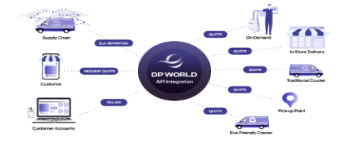






In today’s global environment dominated by the constant movement of people and goods, inventory control is an indispensable factor of competitive advantage. If well coordinated and executed, it can help with getting an improved internal business flow, less delivery time and hence customer satisfaction. Below are ten supply chain management best practices which can aid in the achievement of the supply chain management goals for business success.

Table of Content
- 10 Essential Best Practices for Efficient Supply Chain Management
- 1. Embrace Technology and Automation
- 2. Foster Supplier Collaboration
- 3. Optimise Inventory Management
- 4. Develop a Responsive Logistics System
- 5. Implement Lean Practices
- 6. Strengthen Demand Forecasting
- 7. Focus on Sustainability
- 8. Train and Develop Supply Chain Personnel
- 9. Focus on Risk Management
- 10. Leverage Data Analytics
- Conclusion
1. Embrace Technology and Automation
In a time when success is fuelled by digital transformation, supply chain management must embrace cutting-edge technology. Automating monotonous processes and facilitating fast, precise decision-making are two benefits of tools like artificial intelligence (AI), the Internet of Things (IoT), and enterprise resource planning (ERP) systems.
Automated processes minimize human errors, cut down on time taken to complete a task, and raise volume of work. For instance, IoT-based sensors can help managers keep track of inventory real time while AI can assist managers in countering any future changes rather than reacting to them.
2. Foster Supplier Collaboration
The efficacy of the supply chain may be greatly impacted by developing strong connections with suppliers. Two-way, transparent communication builds trust and enables prompt problem-solving by both sides. Businesses may improve process efficiency and better predict problems by collaborating closely with suppliers.
Stronger collaborations, more accurate forecasting, and a lower chance of delays are the outcomes of improved cooperation. Businesses and suppliers may manage resources more effectively and avoid any bottlenecks when they are in sync.
3. Optimise Inventory Management
Effective inventory management is crucial for reducing costs and meeting customer demand without delays. This includes tracking stock accurately, using forecasting tools, and determining optimal stock levels based on historical data.
This keeps working capital low and stocks high enough to avoid stock out situations in organisations. Accurate inventory has a beneficial effect not only on costs, but on customer satisfaction when they get a product at the right time.
4. Develop a Responsive Logistics System
In logistics, timeliness and flexibility are crucial. A business may stay competitive and prevent interruptions by having a system that can swiftly adjust to shifts in demand, transportation problems, or unforeseen circumstances.
In addition to guaranteeing on-time delivery, a responsive logistics system can respond to unanticipated events and enable businesses to make changes based on real-time data. This adaptability is especially useful in sectors with fast-paced cycles or varying demands.
5. Implement Lean Practices
The goal of lean procedures is to reduce waste at every supply chain level. Businesses may increase productivity and cut expenses by simplifying procedures and eliminating excesses.
Higher-quality outputs, shorter production cycles, and cost reductions are all results of lean processes. For instance, cutting back on extra inventory and pointless handling procedures may increase manufacturing efficiency and enhance product quality, increasing the supply chain’s flexibility and economy.
6. Strengthen Demand Forecasting
For production and inventory management, accurate demand forecasting is essential. Businesses may more precisely estimate demand and make well-informed decisions by using historical data and sophisticated forecasting technologies.
Reliable demand forecasting results in better inventory levels, optimal production planning, and less waste. It helps prevent overproduction or stockouts, improving customer satisfaction and reducing unnecessary costs.
7. Focus on Sustainability
As the awareness about the environment increases in the community, organizations feel pressured into compliance with sustainability. Eco-Initiatives like the use of energy-intensive transportation, recycling or reusing packing materials results in efficient operation of the supply chain resources.
This entails a lot of benefits; sustainable business techniques minimise their negative effects on the environment, lower expenses, and improve brand perception. Prioritising sustainability may help businesses save money on resources while also improving consumer loyalty and brand image.
8. Train and Develop Supply Chain Personnel
Employees must get ongoing training in order to stay current on industry trends, best practices, and technological advancements. Knowledgeable staff members can react to problems faster and make wiser choices.
Better problem-solving and fewer operational mistakes are two benefits of having skilled staff. A workforce that is prepared to take on new challenges is produced by investing in employee development, which guarantees that the supply chain runs smoothly and effectively.
9. Focus on Risk Management
Any supply chain might be at danger from things like market fluctuations, supplier problems, or natural calamities. It is essential to recognise and reduce these risks in order to preserve continuity and avoid expensive interruptions.
By reducing interruptions, proactive risk management guarantees that businesses can keep producing goods even when faced with difficulties. Creating backup plans helps shield the business from unforeseen obstacles and guarantees a speedy recovery of operations.
10. Leverage Data Analytics
Every element of the supply chain may benefit from the insights that data analytics offers. Businesses may find patterns, forecast future trends, and make data-driven choices that optimise operations by examining massive datasets.
Businesses may create more precise projections, make smarter decisions, and have more supply chain insight with data analytics. Additionally, real-time monitoring made possible by advanced analytics enables businesses to react quickly to problems and make necessary modifications.
Conclusion
Businesses may create a strong, effective, and flexible supply chain that can handle present difficulties and change to meet future demands by putting these supply chain best practices into operation. In addition to improving the supply chain, adopting technology, building relationships, and emphasising sustainability also boost the company’s standing and client happiness.
The correct logistics partner is crucial to transforming your supply chain into a streamlined, effective system. From risk management to technology integration, DP World Fulfilment provides all-inclusive solutions designed to address the particular difficulties of contemporary supply chains. With DP World Fulfilment as your partner in building a robust and flexible supply chain, you can grow your company to new heights. Visit our website to learn more.