
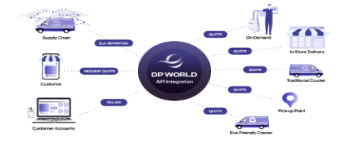






More than just a fad, electronic supply chain management, or eSCM, is revolutionising how companies manage supply chains and logistics in an increasingly globalised marketplace. Businesses are seeing increased operational transparency, cost savings, and efficiency as a result of incorporating technology into every stage of the supply chain. In this blog, we go through what eSCM is reaching to how this digital revolution isn’t only an improvement over conventional approaches; but rather, a fundamental shift that enables companies to remain resilient, competitive, and instantly adapt to changing consumer needs.

Table of Content
- How Electronic Supply Chain Management is Revolutionising Global Logistics
- Understanding Electronic Supply Chain Management
- Strategic Advantages of Electronic Supply Chain Management
- Addressing Challenges in eSCM Implementation
- Insights from Industry Leaders: Case Studies
- Future-Proofing Supply Chains: Trends and Innovations
- The Direction Toward Sustainability
- Conclusion
Understanding Electronic Supply Chain Management
Defining eSCM
Electronic Supply Chain Management, or eSCM, refers to the use of digital tools, software, and technology that augment the traditional supply chain model. Applications of eSCM span from managing supplier relationships to tracking shipments, all with the goal of streamlining the movement of data and commodities. The goal is to establish an efficient, responsive, and flexible supply chain experience.
Key eSCM Components
eSCM integrates several core elements:
- Digital Data Sharing: The smooth, instantaneous sharing of information among all parties involved.
- Automation and Robotics: Automating processes, including distribution, sorting, and inventory control.
- Predictive Analytics: The process of using data to more precisely manage supply levels and estimate demand.
- Platforms for Collaboration: Assisting distributors, suppliers, and final customers in communicating with one another.
Strategic Advantages of Electronic Supply Chain Management
Efficiency in Operations
Operational efficiency is among eSCM’s most important advantages. Automated procedures guarantee on-time delivery, optimise supply chain workflows and lower human error. Businesses can react quickly to any interruptions or shifting client expectations with real-time data, which is essential in the fast-paced world of today.
Cost Management
Electronic supply chains contribute to cost savings by reducing labour costs, minimising waste, and improving order accuracy. Better inventory control, for instance, means companies can reduce storage costs and optimise stock levels based on predictive analytics.
Enhanced Transparency
Unprecedented supply chain visibility is offered by eSCM solutions. Track-and-trace features allow companies to keep an eye on shipments in real-time, which improves consumer confidence and responsibility. Long-term loyalty is reinforced and trust is increased when clients are aware of the whereabouts of their items at all times.
Addressing Challenges in eSCM Implementation
Technological Integration
Integrating eSCM systems with existing infrastructure is often a complex process. Companies must assess compatibility with current software, implement upgrades, and ensure smooth data migration, which can be resource-intensive.
Organisational Change Management
Transitioning to eSCM requires a cultural shift within organisations. Training employees on new systems and processes is essential to successful adoption. In addition, it’s vital to communicate the benefits of eSCM to ensure buy-in at all levels of the organisation.
Considerations for Cybersecurity
Because eSCM depends on the movement of sensitive data, cybersecurity is a major issue. It is essential to guard against ransomware attacks, data breaches, and illegal access to information. Businesses must put a high priority on data security by funding strong cybersecurity defences and frequent system audits.
Additional Challenges
Other obstacles may include fluctuating regulatory environments and the need for constant technology updates to remain competitive. Addressing these challenges proactively can help companies maintain a resilient supply chain.
Insights from Industry Leaders: Case Studies
Exemplary Implementations
Several global companies have set benchmarks in eSCM. Here are some case study examples.
DHL Supply Chain’s Digital Transformation in Asia-Pacific: DHL’s strategy emphasises how it has created a completely digitalised supply chain to meet the various needs of the Asia-Pacific region. Through IoT integration, advanced robotics, and real-time visibility, DHL achieved optimised logistics and enhanced agility needed to meet evolving client requirements.
Amazon’s Cloud-Based Supply Chain and Customer Service: Amazon’s cloud-based eSCM initiatives, including the use of AWS for centralised data management, improved inventory forecasting, and reduced shipping times. These digital solutions have supply network, underscoring the value of eSCM in large-scale logistics.
Important Takeaways
In the logistics industry, these examples highlight the value of creativity and a readiness to adopt new technology. Through speedier and more dependable delivery of goods, businesses that use eSCM may drastically improve customer satisfaction, cut expenses, and streamline processes. Investing in these technologies is essential for remaining ahead of the competition in a global market, as demonstrated by the successful eSCM implementation examples. Adopting eSCM may create a platform for long-term development and resilience while producing quantifiable increases in efficiency and profitability.
Future-Proofing Supply Chains: Trends and Innovations
Developments in Technology
eSCM is evolving along with technology. The increasing use of machine learning and artificial intelligence enables more accurate demand forecasting and faster decision-making than ever. Another important technology to highlight is Blockchain technology; supply chain traceability and transparency might be enhanced by blockchain technology, which is used to ensure that products meet specific quality standards by recording, tracing and analysing supply chain data.
The Direction Toward Sustainability
Sustainable practices are becoming increasingly significant in eSCM. Businesses may lessen their carbon footprint by streamlining logistics and cutting out on pointless transportation, to add further, this dedication is also being fuelled by advancements in green technology, such as eco-friendly packaging and energy-efficient warehouses.
Conclusion
With its substantial benefits in efficiency, cost reduction, and visibility, electronic supply chain management is revolutionising international logistics. In turn, the techniques of eSCM for businesses might let them obtain a competitive advantage by being able to anticipate and respond quickly to changes in the market. So, it goes without saying that adopting eSCM can be crucial to the industry’s future development and resilience in today’s interconnected world.